Custom Concrete Patio Contractor in Centerton, Arkansas
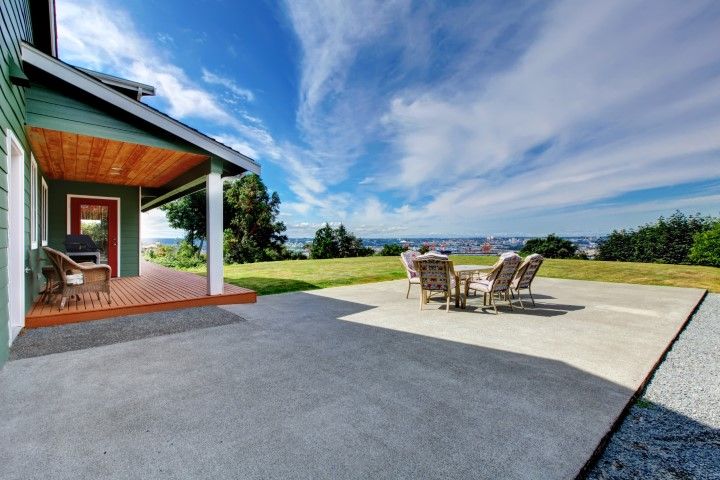

A good patio should feel like part of the home rather than an empty slab in the backyard. It might become the place for a grill and dining table, an outdoor seating area, a fire pit, or simply a clean surface where you can spend time outside without dealing with mud and uneven ground. Centerton Concrete Contractor installs concrete patios in Centerton, Arkansas, with layouts and finishes designed around the property, how you plan to use the space, and how water needs to move through the yard.
What We Cover:
- New Concrete Patio Installation
- Patio Layout & Design
- Decorative & Stamped Concrete
- Drainage & Site Preparation
- Patio Extensions
- Concrete Patio Repair
- Maintenance & Long-Term Care
Planning a Concrete Patio That Actually Works for Your Backyard
Patio planning should start with function. Before choosing colors or stamped patterns, think about what you want to put on the patio and how people will move through the space. A small seating area has different requirements than a patio designed for a dining table, grill, outdoor kitchen, and several groups of furniture. Door locations, steps, rooflines, landscaping, property grade, and access between the house and yard can all influence the most practical layout.
Drainage deserves particular attention in Centerton and throughout Northwest Arkansas, where periods of heavy rainfall can move a substantial amount of water across a property. A patio installed next to a house needs an appropriate slope so runoff moves away from the structure rather than collecting against the foundation. At the same time, water shouldn't simply be redirected toward a neighbor's property or another area where it creates a new problem. We evaluate the existing grade and surrounding surfaces before determining patio elevations.
Concrete Patio Design & Finish Options
Concrete offers considerably more flexibility than the traditional smooth gray slab many homeowners picture. A basic broom finish remains one of the most practical options because it is affordable, relatively simple to maintain, and provides useful traction. Decorative finishes can create a more customized outdoor space when appearance is a larger priority.
- Broom-Finished Concrete: A simple textured surface that works well for patios where function, traction, and affordability are the priorities.
- Stamped Concrete: Patterns can reproduce the general appearance and texture of materials such as flagstone, slate, brick, or individual pavers.
- Colored Concrete: Concrete coloring can introduce warmer earth tones, darker grays, or other shades that coordinate with the exterior of the home and surrounding landscaping.
- Exposed Aggregate: This finish exposes some of the aggregate within the concrete, producing a textured surface with more visual variation than standard concrete.
- Decorative Borders: A contrasting border can add detail without requiring a decorative finish across the entire patio.
- Saw-Cut Patterns: Planned decorative cuts can divide a large patio visually and create simple geometric designs.
There isn't one finish that is right for every patio. Stamped and colored concrete can create a more distinctive appearance, but those finishes generally cost more and may require additional maintenance. A straightforward broom finish may make more sense if the patio will primarily be covered with furniture, rugs, grills, or other outdoor features. We'll explain the practical differences so you can decide where spending additional money will actually improve the space.
Our Concrete Patio Installation Process
Once the size, shape, elevation, and finish have been determined, the installation begins with preparing the site. Grass, topsoil, old concrete, or other unsuitable material may need to be removed before the area is excavated and graded. The underlying base is prepared and compacted as needed, forms establish the shape and elevation of the patio, and reinforcement is added when appropriate for the project. This preparation isn't particularly exciting to look at, but it is one of the most important parts of the installation because the finished slab depends on the support underneath it.
Concrete is then placed, leveled, and finished according to the selected surface. Control joints are incorporated to help manage the shrinkage cracking that naturally occurs as concrete cures. If stamped or decorative concrete has been selected, the additional coloring, texturing, or pattern work is completed as part of the finishing process. The patio then needs time to cure before furniture, grills, or other heavy items are placed on it. We'll explain the appropriate timeline for your project rather than leaving you guessing when the new space can be used.
Is a Concrete Patio Right for Your Home?
Concrete is particularly useful for homeowners who want a permanent outdoor surface without the routine maintenance associated with some alternatives. It doesn't rot like wood, doesn't require individual units to be reset like some paver installations, and can be formed into a wide variety of shapes. It can also support grills, outdoor furniture, planters, and many other features commonly used in backyard living spaces.
That doesn't mean concrete is always the right choice. Pavers may be preferable if you want individual pieces that can be removed and replaced or if a particular paver appearance is central to the design. A raised wood or composite deck may make considerably more sense when the back door is well above grade or the property has a steep elevation change. Concrete is usually most practical when you want a durable patio at or relatively close to ground level. Understanding those tradeoffs before construction is much easier than trying to make the wrong material work for the property.
Patio Size, Layout & Outdoor Living
One of the most common mistakes with patios is making them too small for their intended use. A patio can look spacious when it's completely empty but feel cramped once a dining table, chairs, grill, and seating are added. Before settling on dimensions, it helps to think about the actual footprint of the furniture and leave enough room for people to comfortably walk around it.
Patios can also be designed in stages. If you already have a concrete patio that is structurally sound but feels too small, an extension may provide additional room without removing the entire existing slab. The transition between old and new concrete will generally remain visible because fresh concrete rarely matches the exact color and weathering of an older surface, but thoughtful layout and joint placement can make the addition feel intentional.
If you're considering an outdoor kitchen, permanent fire feature, pergola, hot tub, or other heavy or built-in feature, mention it during the planning stage. Those additions may affect slab design, placement, utilities, footings, or reinforcement. Planning for them before the patio is poured is generally much easier than modifying finished concrete later.
Concrete Patio Repair & Replacement
Cracks don't automatically mean a patio needs to be demolished. Concrete naturally cracks, and some cracks can remain primarily cosmetic. Other damage can indicate movement beneath the slab, poor drainage, erosion, or settlement. Uneven sections can also become trip hazards or cause water to move in the wrong direction.
The appropriate repair depends on what caused the damage. Crack filling or surface repairs may be worthwhile when the underlying slab remains stable. Resurfacing can improve certain surface conditions, but it won't correct significant movement underneath the concrete. If the patio has widespread settlement, major elevation problems, extensive deterioration, or drainage that cannot reasonably be corrected while keeping the existing slab, replacement may provide a better long-term solution. We'll look at the condition of the patio before recommending one approach over another.
What Determines the Cost of a Concrete Patio?
The cost of a concrete patio depends on its size, site conditions, finish, and complexity. Square footage is important, but accessibility can matter just as much. A backyard that a concrete truck or equipment can easily reach presents a different installation than an enclosed yard where material must be moved a significant distance from the street. Excavation, demolition of an old patio, grade changes, base preparation, reinforcement, curves, steps, drainage work, and decorative finishes can all affect the price.
A basic rectangular broom-finished patio is generally one of the more economical configurations. Stamped concrete, integrated colors, decorative borders, complex shapes, and other upgrades add labor and material costs. Rather than assuming the most expensive finish is the right one, we can help you identify which features matter to you and where a simpler approach might accomplish the same goal for less.
Maintaining Your Concrete Patio
Routine maintenance is relatively straightforward. Keep the surface reasonably clean, remove leaves and organic material that can stain the concrete, and clean spills before they have time to penetrate the surface. Avoid using chemicals that aren't intended for concrete, particularly during winter. Decorative patios may need periodic resealing depending on the finishing system and exposure, while a basic broom-finished patio may require considerably less attention.
It's also worth keeping an eye on the landscaping around the patio. Downspouts, erosion, soil settlement, and changes to surrounding grade can alter how water moves years after the original installation. Catching drainage issues early can help prevent problems from developing around the slab.
Planning a Concrete Patio in Centerton?
Whether you have an empty backyard, an aging patio that needs replacement, or an existing outdoor space that simply isn't large enough anymore, we can help you determine what makes sense for the property. We'll discuss how you want to use the patio, evaluate the available space and drainage, explain finish options, and develop a scope based on the actual site.
Contact Centerton Concrete Contractor today to discuss your patio project and request a free, no-obligation estimate.