Comprehensive Concrete Services in Centerton, Arkansas
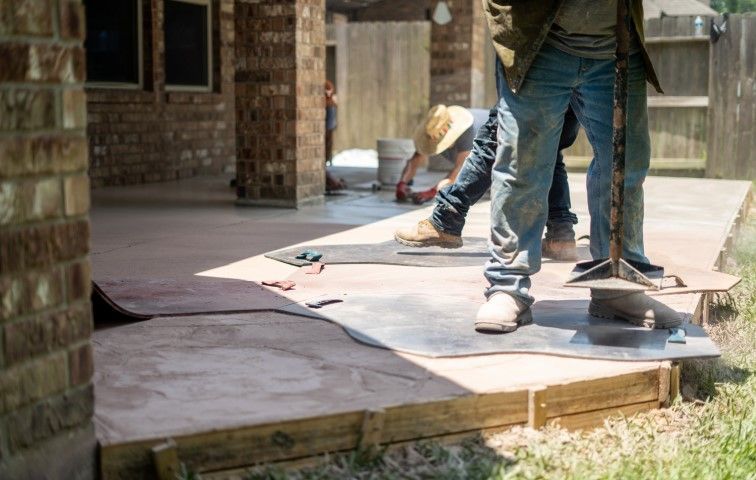

Planning a concrete project can bring up more questions than expected. How thick should a driveway be? Does cracked concrete need to be replaced or can it be repaired? Is reinforcement necessary? What type of finish makes sense for a patio? At Centerton Concrete Contractor, we help homeowners and businesses understand those decisions before work begins.
We provide concrete services throughout Centerton, Arkansas for new construction, property improvements, replacements, and repairs. The appropriate approach depends on more than the size of the project. Soil conditions, drainage, expected loads, existing concrete, site access, and the way the finished surface will be used all influence how concrete should be installed.
Our concrete services include:
- Residential Concrete
- Commercial Concrete
- Decorative & Stamped Concrete
- Concrete Slabs & Foundations
- Concrete Driveways
- Concrete Patios
- Walkways & Sidewalks
- Concrete Repair
Concrete Solutions Built Around the Property
Concrete isn't a one-size-fits-all building material. A backyard patio supporting furniture and foot traffic doesn't need to be designed exactly like a driveway carrying vehicles every day. A commercial slab may have entirely different requirements based on equipment, traffic, drainage, and intended use.
That's why we start by understanding what you're actually trying to accomplish.
Centerton includes everything from established properties around the older portions of town to newer residential development extending toward Bentonville and along the Highway 102 corridor. Some projects involve removing and replacing aging concrete, while others begin with undeveloped areas where grading and drainage need to be established from the start.
Before recommending an approach, we consider the condition of the site, how water moves across the property, expected use of the concrete, and any existing problems that could affect the new installation.
Why Proper Concrete Installation Matters
Most of the important work on a concrete project eventually becomes invisible.
Once a driveway or patio is finished, you can't see how well the soil and base underneath it were prepared. You may not see the reinforcement within the slab, and improper drainage might not become obvious until the property experiences heavy rainfall.
These details can have a major effect on long-term performance.
Northwest Arkansas experiences hot summers, periods of freezing winter weather, substantial rainfall, and repeated seasonal temperature changes. Concrete naturally expands, contracts, and shrinks. Proper preparation and joint placement help manage that movement, while appropriate grading helps prevent water from collecting where it shouldn't.
We focus on the parts of the installation that matter after the concrete truck leaves.
- Site Preparation: Existing material, unsuitable soil, and other conditions may need to be addressed before forming begins.
- Base Preparation: A properly prepared and compacted base provides more uniform support beneath the slab.
- Drainage & Grading: Concrete should direct water appropriately rather than creating new drainage problems around a home or business.
- Reinforcement: Depending on the application, reinforcement can help the slab remain together when cracking or movement occurs.
- Control Joints: Joints create planned locations for shrinkage cracking and are an important part of most slab installations.
- Proper Finishing: The finish affects appearance, traction, drainage, and how the surface performs in everyday use.
Our Concrete Project Process
Knowing what will happen on your property can make a construction project considerably easier to plan around. Although the exact sequence varies depending on the work, most projects follow several basic stages.
- Project Evaluation: We discuss what you're trying to build or repair and evaluate the proposed work area. This gives us an opportunity to identify access limitations, drainage concerns, elevation changes, existing damage, and other important site conditions.
- Scope & Estimate: We determine what the project is likely to require and provide an estimate. Concrete pricing can be affected by square footage, thickness, demolition, excavation, reinforcement, finish, accessibility, and the amount of preparation necessary.
- Site Preparation: Existing concrete may need to be removed before excavation, grading, and base preparation begin. Forms are then established to define the shape and elevation of the new concrete.
- Concrete Placement & Finishing: Concrete is placed within the forms, leveled, finished, and jointed according to the application and desired surface.
- Curing: Fresh concrete needs time to develop strength. The appropriate amount of time before walking, driving, building, or placing heavy loads on the surface depends on the project and conditions.
- Final Review: Once the work is complete, we review the finished project and provide any relevant instructions regarding initial use and maintenance.
Residential Concrete Services
Concrete around a home needs to balance function, appearance, drainage, and durability. We work on residential concrete projects throughout Centerton, including driveways, patios, walkways, slabs, and replacement of deteriorated surfaces.
Concrete Driveways
A residential driveway experiences repeated concentrated loads from cars, trucks, SUVs, and other vehicles. Proper thickness and base preparation are particularly important in areas where vehicles regularly turn, park, or enter a garage.
Driveway projects may involve completely replacing an existing slab, expanding a narrow driveway, adding additional parking space, or installing concrete for a new home.
We also pay attention to how the driveway meets the garage, street, sidewalks, and surrounding grade. Those transitions need to work together without creating unnecessary drainage or accessibility problems.
Concrete Patios
A concrete patio can provide a relatively low-maintenance surface for outdoor dining, grills, furniture, and backyard entertaining.
The design should account for more than appearance. Patio elevation and slope are especially important when the slab is located next to the house. Water should move away from structures and toward an appropriate drainage area rather than collecting against the foundation.
Homeowners can also choose between traditional broom finishes and various decorative options depending on the desired appearance and maintenance expectations.
Walkways & Sidewalks
Concrete walkways can connect driveways, front entrances, patios, side yards, garages, and other areas of a property.
When replacing or adding a walkway, we consider width, elevation, slope, transitions, and surrounding landscaping. Uneven transitions and poorly planned grades can create drainage problems or unnecessary trip hazards.
Decorative & Stamped Concrete
Concrete doesn't have to have a standard gray broom finish.
Stamped concrete uses patterns and textures to create a more decorative surface and can be designed to resemble materials such as stone, brick, or pavers. Integral colors, surface-applied colors, borders, and other finishing techniques can further change the appearance.
There are tradeoffs to consider.
Decorative concrete generally costs more than basic finished concrete because it requires additional materials and labor. Color can also vary somewhat between pours, and decorative surfaces may require periodic sealing depending on the system used and the appearance you want to maintain.
For some homeowners, those considerations are worthwhile. For others, a straightforward broom-finished surface is the more practical choice. We can explain the differences before you decide.
Concrete Slabs & Foundations
Concrete slabs provide the base for many structures and improvements, including sheds, workshops, additions, equipment areas, and other residential or commercial applications.
The requirements depend heavily on what will eventually sit on the concrete.
A small nonstructural slab has different considerations than a slab supporting a building. Thickness, reinforcement, footings, base preparation, penetrations, and applicable construction requirements may all change based on the intended structure.
This is one area where determining the requirements before pouring is particularly important. Once a structure has been built on an inadequate slab, correcting the underlying concrete becomes considerably more complicated.
Concrete Repair
Cracked concrete doesn't automatically mean the entire slab needs to be replaced.
Small cracks, isolated surface damage, and damaged edges may sometimes be repairable. More substantial settlement, widespread deterioration, drainage problems, or structural movement can indicate a larger underlying issue.
The important question is why the concrete was damaged.
Filling a crack can improve its appearance and help limit water intrusion, but it doesn't necessarily eliminate whatever caused the slab to move. Likewise, resurfacing deteriorated concrete won't correct a poorly supported slab underneath it.
We evaluate the condition of the existing concrete before recommending repair or replacement. If repairing a surface is unlikely to provide a reasonable result, we'll explain why replacement may make more sense.
Commercial Concrete Services
Commercial concrete needs to be planned around how a property operates.
Depending on the project, that could include sidewalks, parking areas, equipment pads, slabs, dumpster pads, loading areas, entrances, or other concrete surfaces. Traffic volume, vehicle weight, accessibility, drainage, equipment use, and construction scheduling can all influence the design and installation.
For businesses, disruption is another practical consideration. Access to entrances, parking, deliveries, employees, and customers may need to be maintained while work is underway.
We consider those operational requirements during planning rather than treating a commercial project like an oversized residential pour.
How Much Does Concrete Work Cost in Centerton?
There isn't a useful single price per square foot that applies to every concrete project.
Square footage matters, but it's only one part of the estimate. Two patios of exactly the same size can cost different amounts if one is easily accessible on level ground and the other requires substantial excavation, difficult equipment access, or removal of existing concrete.
Factors that commonly affect concrete pricing include:
- Total square footage
- Required slab thickness
- Amount of excavation and grading
- Base preparation
- Reinforcement requirements
- Demolition and disposal of existing concrete
- Concrete mix and quantity
- Pumping or difficult site access
- Standard versus decorative finishes
- Steps, curves, borders, or complex forming
- Drainage considerations
A site evaluation provides a much better basis for estimating a project than applying a generic square-foot price without seeing the property.
Planning a Concrete Project in Centerton?
Whether you're replacing a cracked driveway, building a backyard patio, adding a concrete slab, repairing an existing surface, or planning concrete for a commercial property, we'll help you understand what the project involves before work begins.
Tell us what you're trying to accomplish and what concerns you have about the property. We can evaluate the site, discuss the available options, and explain the factors that will determine the scope of work.
Contact Centerton Concrete Contractor today to discuss your project and request a free, no-obligation estimate.